| « I am a giant snow crystal, imperfect thing of habit, bouncing along life's gusts,... | Mystery of Whirlpool Hollows » |
Ripples
When there is no pebble tossed
No wind to blow
--Grateful Dead “Ripple”
I don’t know where to start on this one. For some time I’ve been seeing concentric circular patterns on car windshields and car bodies – bands of white spreading out from a central point like ripples in a pond from a tossed pebble. Typically, they spread outward 3-10 inches or so before meeting up with ripples originating from another spot.
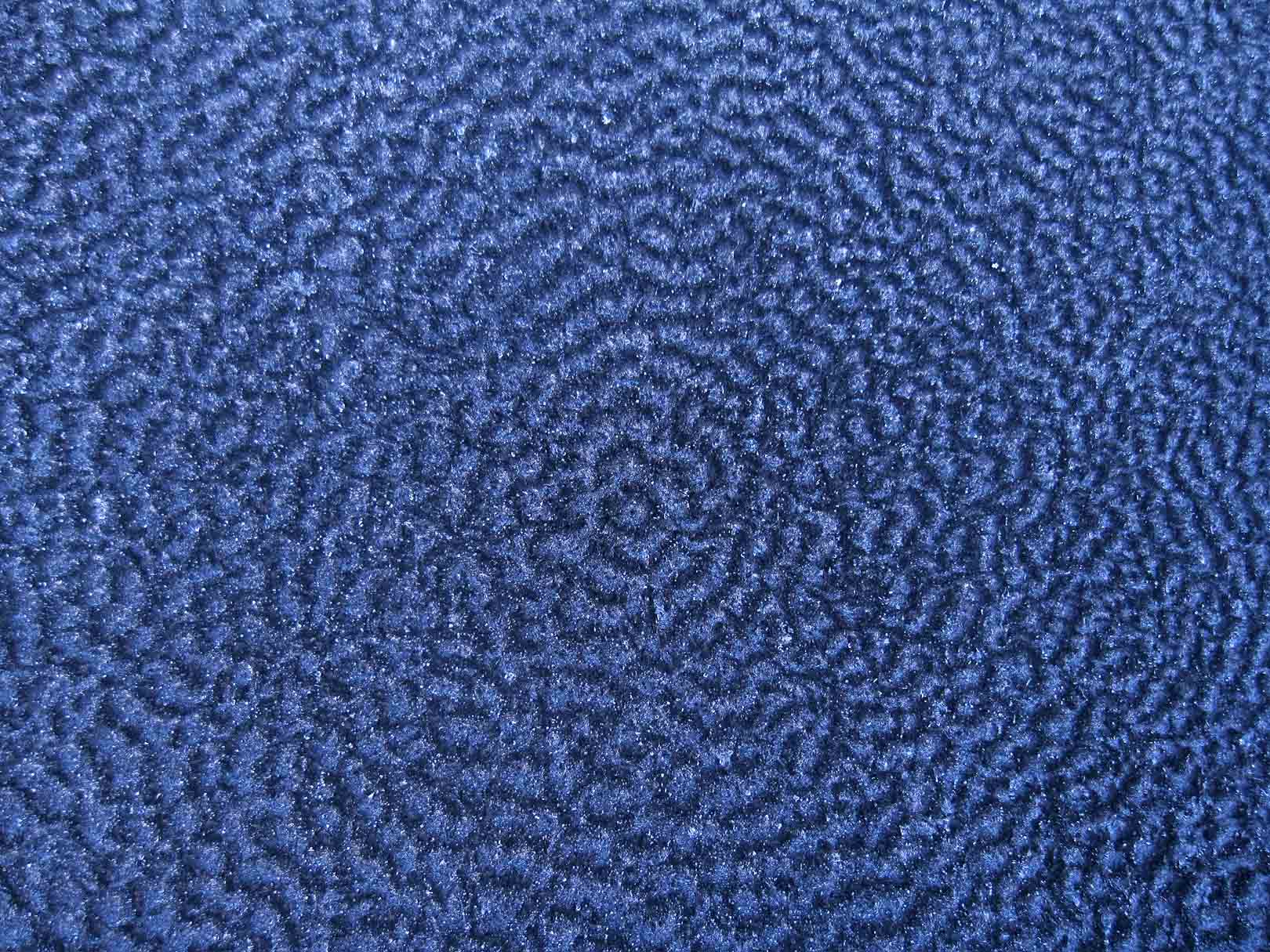
When I try to zoom in on the individual crystals, I usually see only vague outlines with the occasional recognizable form. What could cause this pattern? Here's a clue.
In the image below, you can see a moat in the upper right corner, so I think this pattern occurs when there are many tiny droplets condensed on the surface. The dark parts between ripple crests may be imperfect moats.
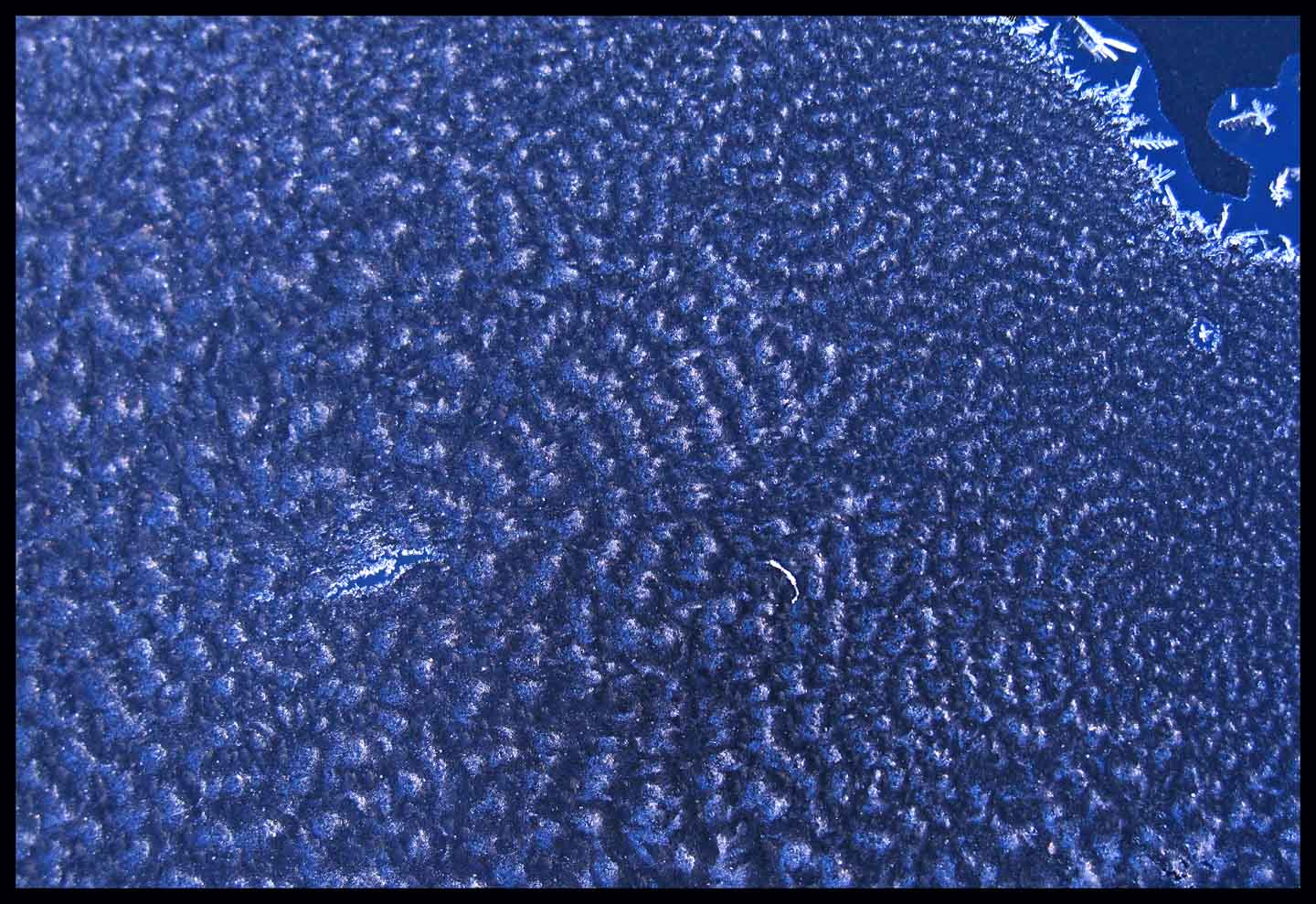
The first idea I had was this. A fog of tiny droplets condense on the surface. But one spot is colder than other spots. A group of droplets freeze in this spot, and then grow from the vapor, thus sucking vapor out of the air. This creates a roughly circular dark moat around the relatively white crystals in the center. Slightly beyond the moat, where it is still colder than other regions, more droplets start to freeze, thus creating the second ring. The pattern repeats, producing concentric ring after concentric ring.
But there is one big problem with this idea. The center is dark, not white.
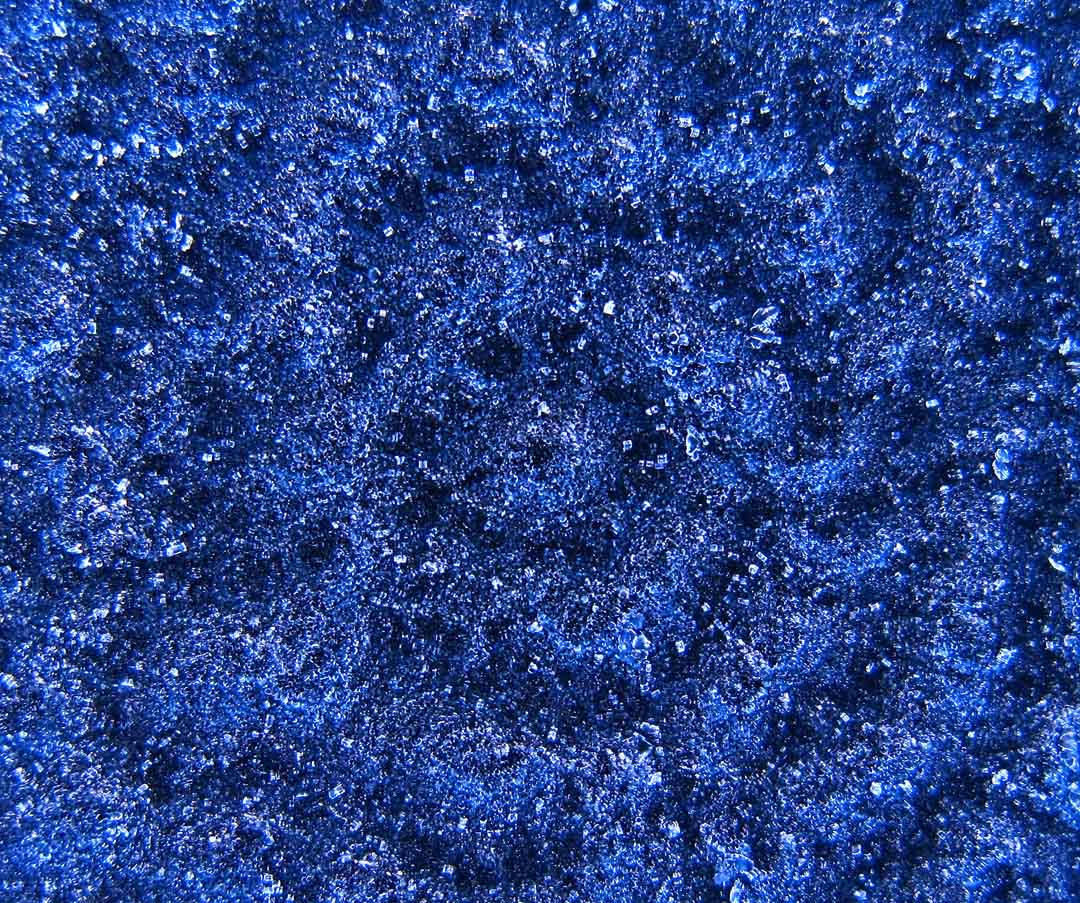
Anybody got any better ideas?
- JN
 jnelson This entry was posted on February 5th, 2010 at 08:53:00 pm by Jon and is filed under Snow Science, Ice Science, Film frost, Funny-strange ice.
1 comment

Lots of people have ideas about this, but no one really knows exactly how these patterns form (there are probably lots of ways, really). I just finished a dissertation on this kind of pattern formation in small molecule crystals, and I think it’s safe to say that there is no definitive mechanism that applies to every system. (Look up banded spherulites if you want to read more…it’s a common morphology in polymers and small molecules, and has been studied for well over 200 years.) In this case, it is very likely that the crystals grow via “rhythmic deposition,” very much like you suggest. I would guess that there’s a thin film of water on the windshield, and that a small polycrystal nucleates and grows until it uses up all of the water close by, and then has to wait for more water to diffuse into the gap it has created. Since some crystals will have reached further out from the center of the polycrystal than others, they will begin to grow first, creating a new ring with an empty space left between the new ring and the old.
As far as your dark spot is concerned, the seed for the polycrystal can be very, very small, but once growth begins in the liquid film, it progresses very rapidly outward. The central seed doesn’t have time to grow very big before it is surrounded by new crystals that use up all of the available water. Also, if the film is very thin, the seed can pierce the surface of the liquid. Once broken, the liquid will pull away from that central spot due to the surface tension of the water, thus leaving an empty hole.
In any case, your mechanism sounds just about right. Even though the center looks dark, I would bet that if you could look very, very closely you would probably find a tiny seed that started it all.